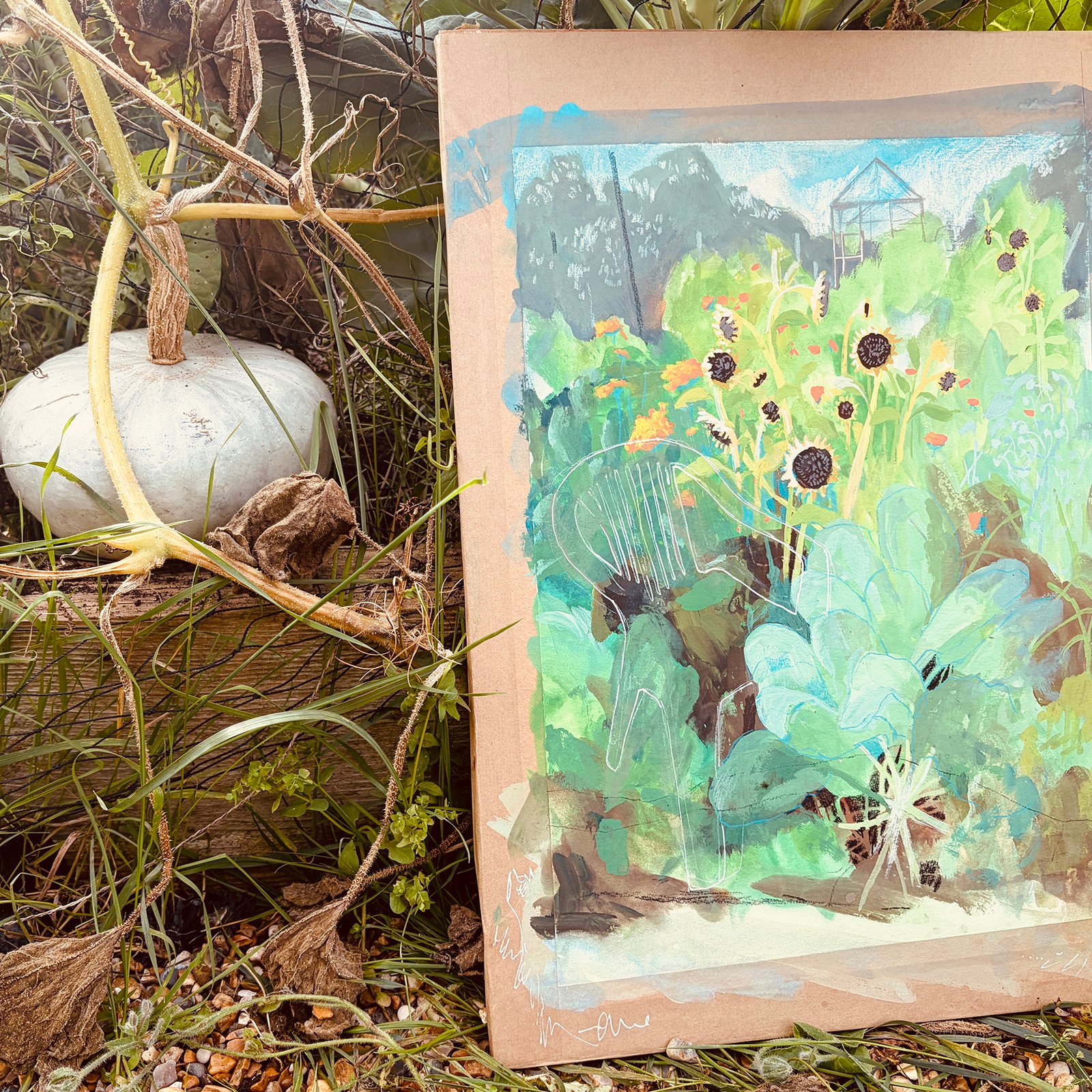
A few months ago I gave up teaching so that I could spend more time focusing on my own artwork.
It sounded wonderfully simple...
Paint all day and make lots of brilliant work
Find my artistic direction
Possibly become one of those floaty art people who wears linen. It hasn't quite worked out like that. What I have discovered has been much more useful.
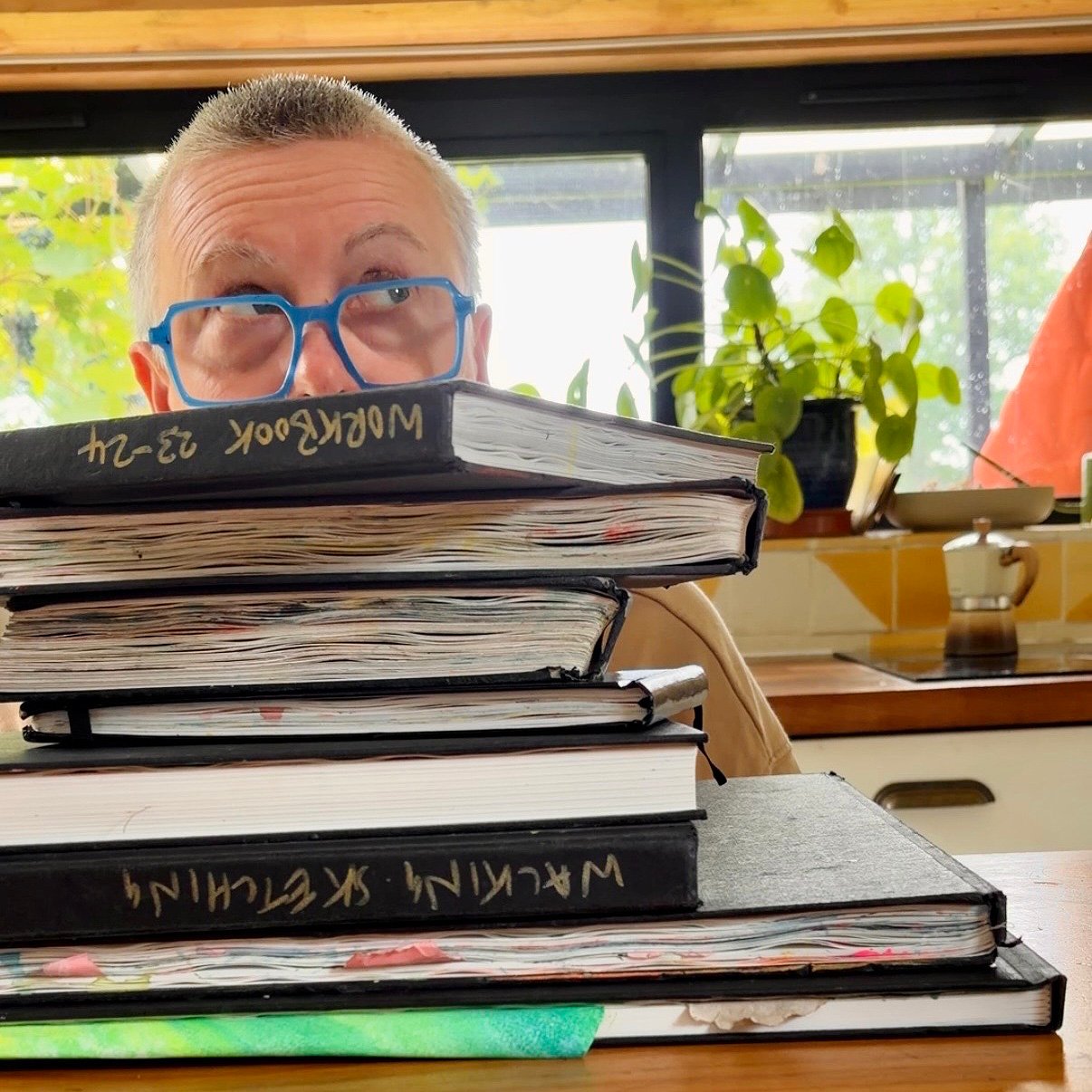
BE RELISTIC
One of the first things I discovered was that I can't paint for hours and hours every day.
At first I thought that because I had given up work, I should be spending enormous amounts of time making art.
If I wasn't in the studio all day, was I really doing enough?
The answer was no.
Instead, I started with about an hour of focused studio time each working day and gradually built it up.
Making art is a creative muscle. You need to build it up slowly and regularly. Expecting it to suddenly perform for six hours is not realistic.
The breakthrough piece is not the finish line
I've also learnt that you might never quite “find yourself” in the way you imagine.
There is always that idea that eventually you'll discover your style, your voice, your thing and then what follows is everything you make will be brilliant.
Sadly, the art gods have not offered me that particular deal.
I've had a few pieces that have felt like breakthroughs. I've looked at them and thought, "Oh. There you are!".
Then I've started the next painting and it felt like taking 8 steps back. This took some getting used to. Awkward paintings, strange experiments and things that really should probably remain between me and the bin.
Now I'm beginning to see those pieces differently.
They're part of how I get to the next breakthrough.
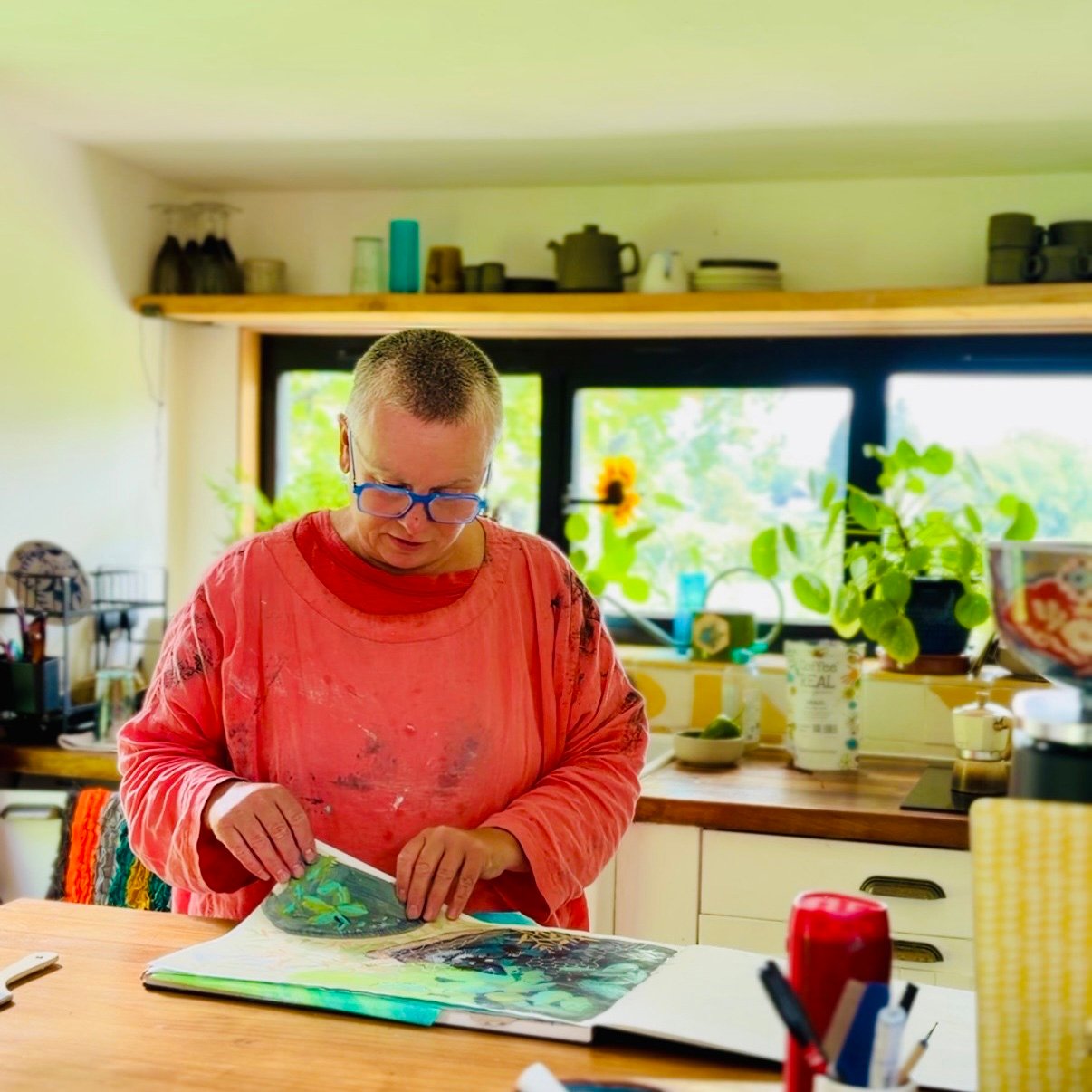
The internal critic gets very loud
When painting became the main thing I was doing, I noticed something unexpected. The voice in my head got louder.
What are you doing?
Is this any good?
Why are you painting this?
Who is going to care?
It reminded me of learning to meditate. When you first start meditating, it can seem as though meditation has made your mind incredibly busy. It hasn't. You're simply noticing the busy mind that was already there.
I think the same thing happens when you give yourself space to make art. When there are fewer distractions, you become more aware of the commentary going on in your head. The trick isn't necessarily to get rid of it. It's learning not to let it run the studio.
Protect the best part of your day
I've also become much more protective of my energy.
I know that my best energy is usually in the morning, so that's when I paint and draw.
Business, emails, social media and all the other things that come with being an artist can happen later.
This sounds obvious.
It took me quite a while to actually do it.
I've also found that having particular days and times for studio work creates breathing space everywhere else.
If I don't protect the painting time, everything else expands to fill it... Shopping, gardening, admin, social media, even washing up could stop me!
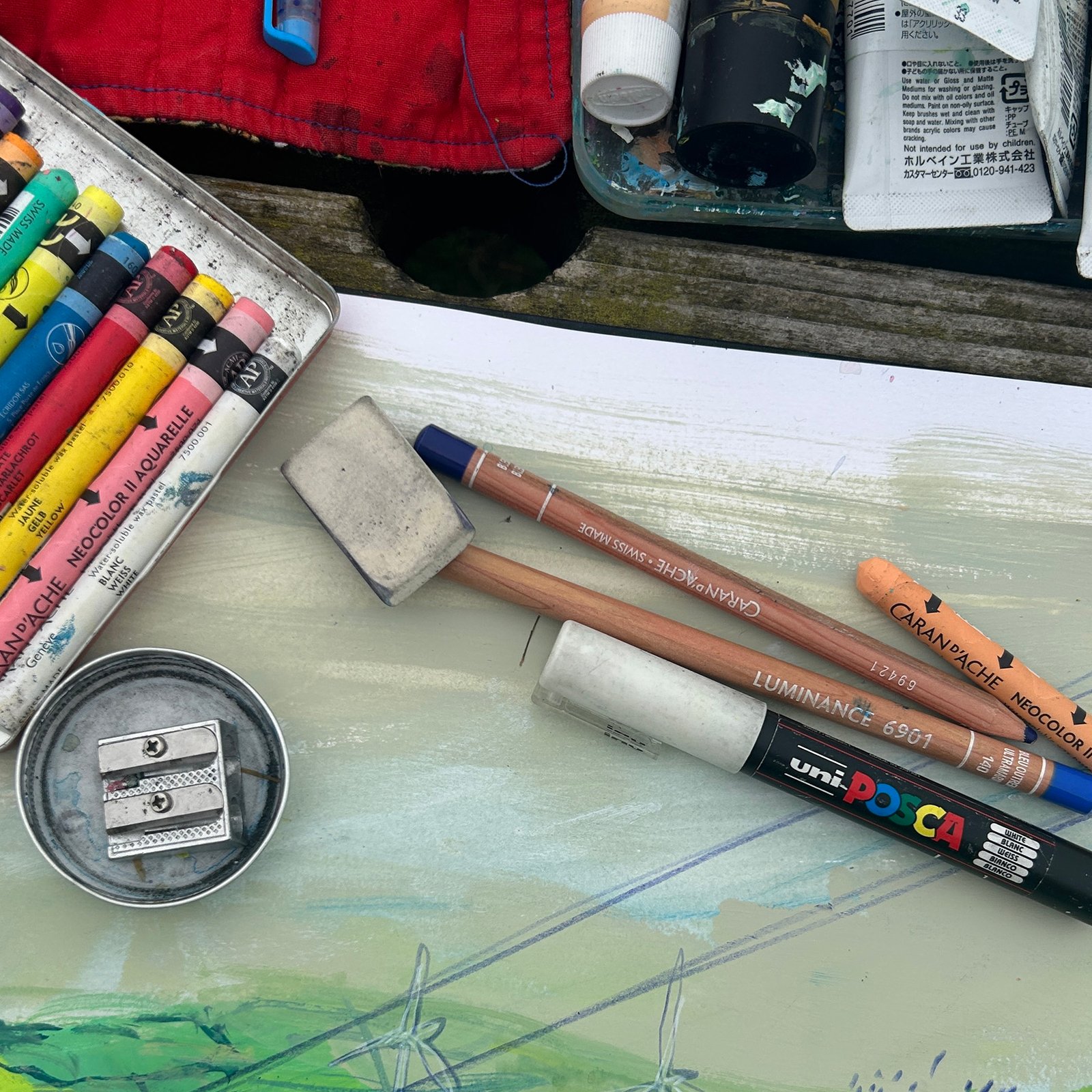
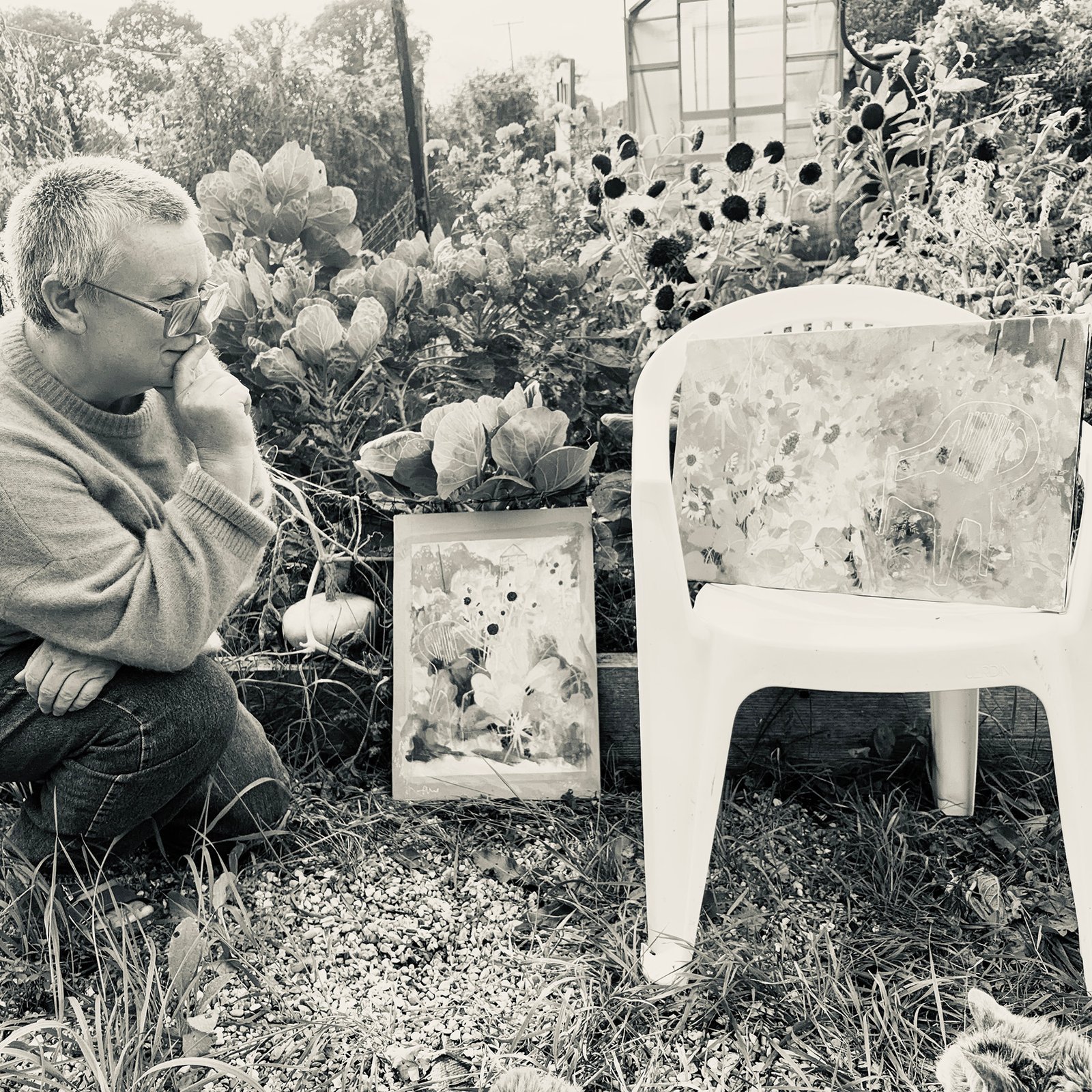
Finding inspiration from a different place
One of the reasons I stopped teaching was to give myself some time to explore where my artwork wanted to go.
I didn't want the first question to be:
Will this sell?
I wanted to ask:
Where is this work taking me?
So for the first couple of months I barely posted anything on my socials. That was deliberate.
Inspiration and feedback is wonderful.
However I wanted to be free from external influence. I even kept my work from my closest art friends. Not because I thought the work was ground breaking or special but so that the next steps would come from my own internal direction.
So, was giving up work worth it?
For me, the biggest change hasn't been that I've suddenly become a wildly productive artist.
It's that I've started paying much more attention to how I actually work.
I'm beginning to understand what gives me energy, what drains it, what I enjoy painting and what keeps appearing in my work without me consciously planning it.
Perhaps that's the biggest thing I've learnt. You don't necessarily discover where you're going by thinking about it.
Sometimes you discover it by making enough work to notice where you've already been.